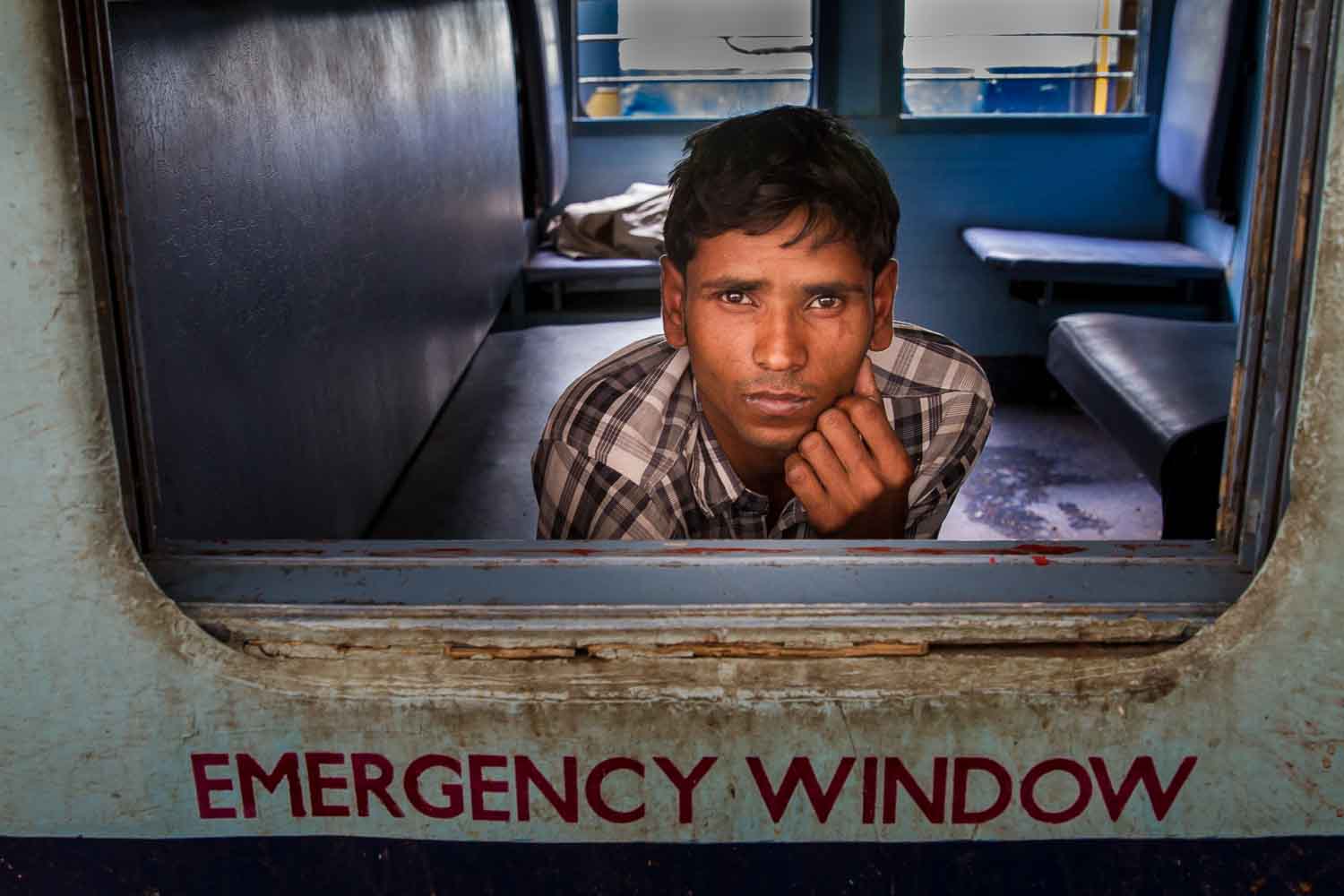
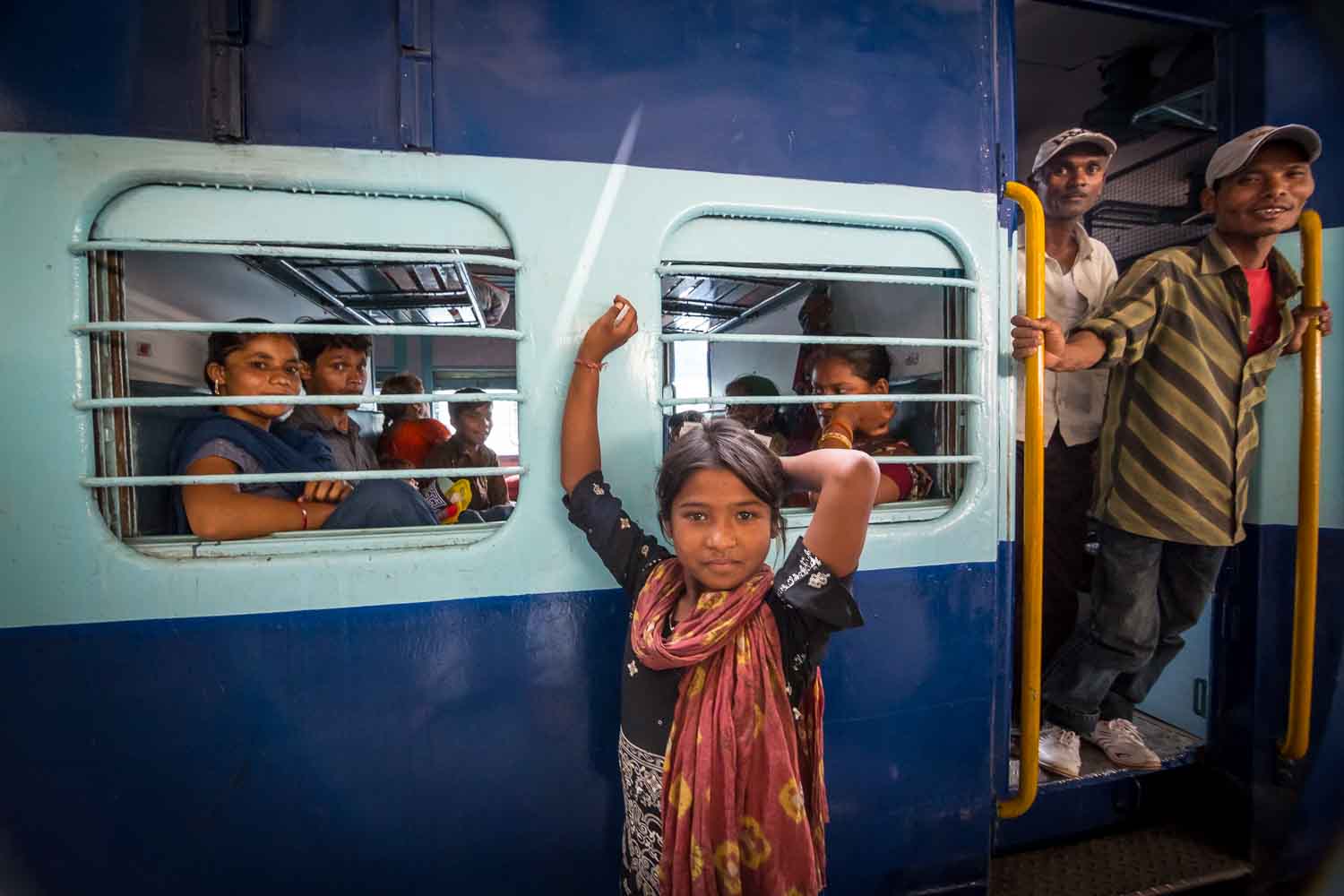
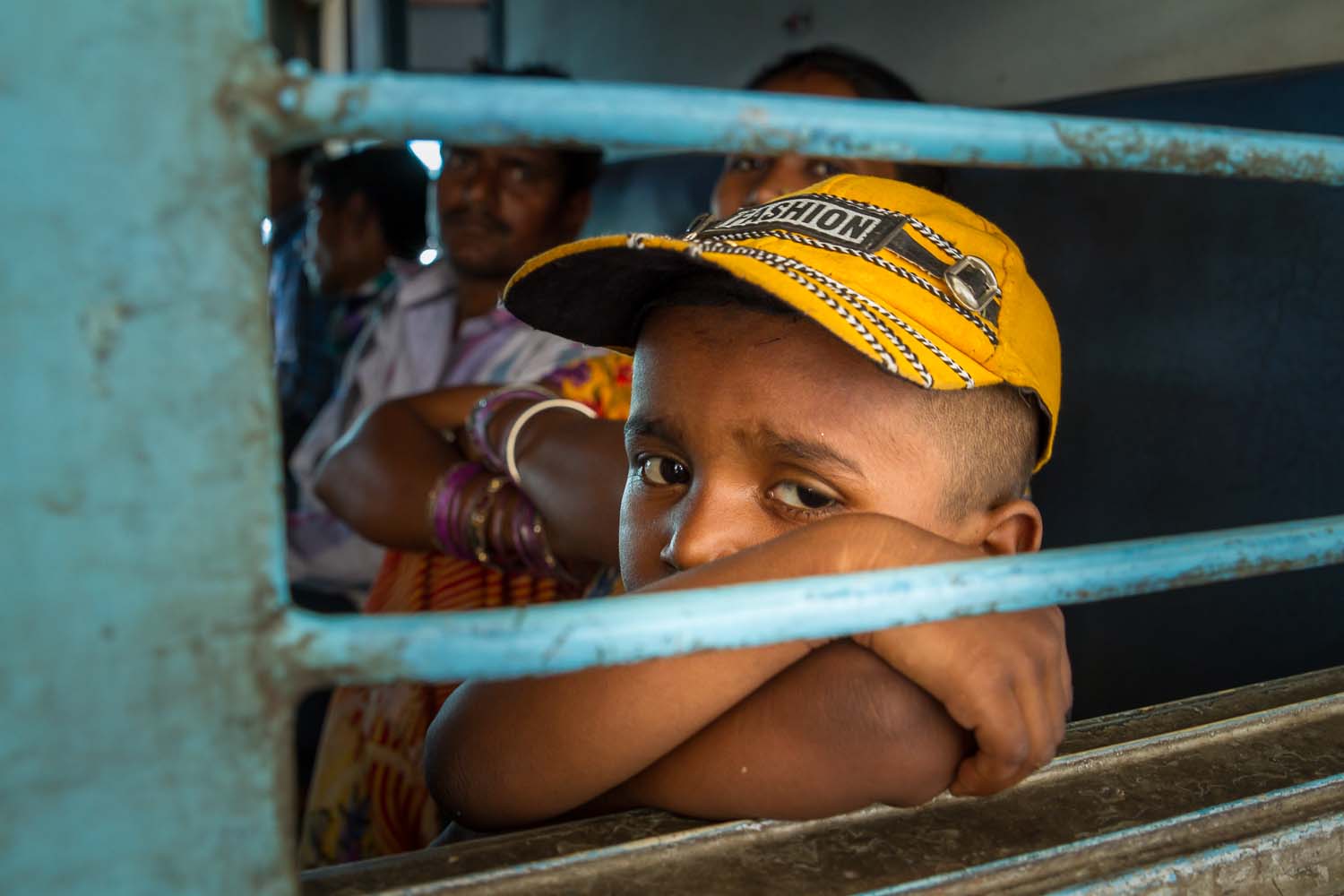
Ajmer/Delhi, India. If there is a microcosm of Indian life in all its complexity and fecundity, India’s trains are likely to be it. Over 9,000 passenger trains transport nearly 22 million passengers daily over 70,000 miles of track through India’s mountains, deserts, valleys, and farmlands. They carry workers, students, holymen and the destitute, as well as goats, sheep, chickens, and countless other creatures heading to and from the frenetic cities. The trains hiss, squeal and clang as Hindi music blasts from radios hanging on food hawkers’ carts and endless loops of advertisements blare through station intercoms. A mass of humanity moves from one platform to the next in a trample of shouting commuterdom. As trains arrive and depart, the coveted window seats begin to fill. A few paint-decayed bars are all that separate the humanity within from without. Hands and arms rest on ledges, heads turn and nod, glances linger. Brief encounters among strangers born of the intimacy of the enclosed carriages and, perhaps, the slower pace of the rails.